Workplace violence rarely begins with violence.
It builds on predictable stages, each one activating more of your staff's threat response. Understanding that arc, and where to intervene, is the key to protecting them.
The Anatomy of an Incident
Every workplace violence incident follows the same arc. Here's what's happening at each stage, and what it means for the nurse in the room.
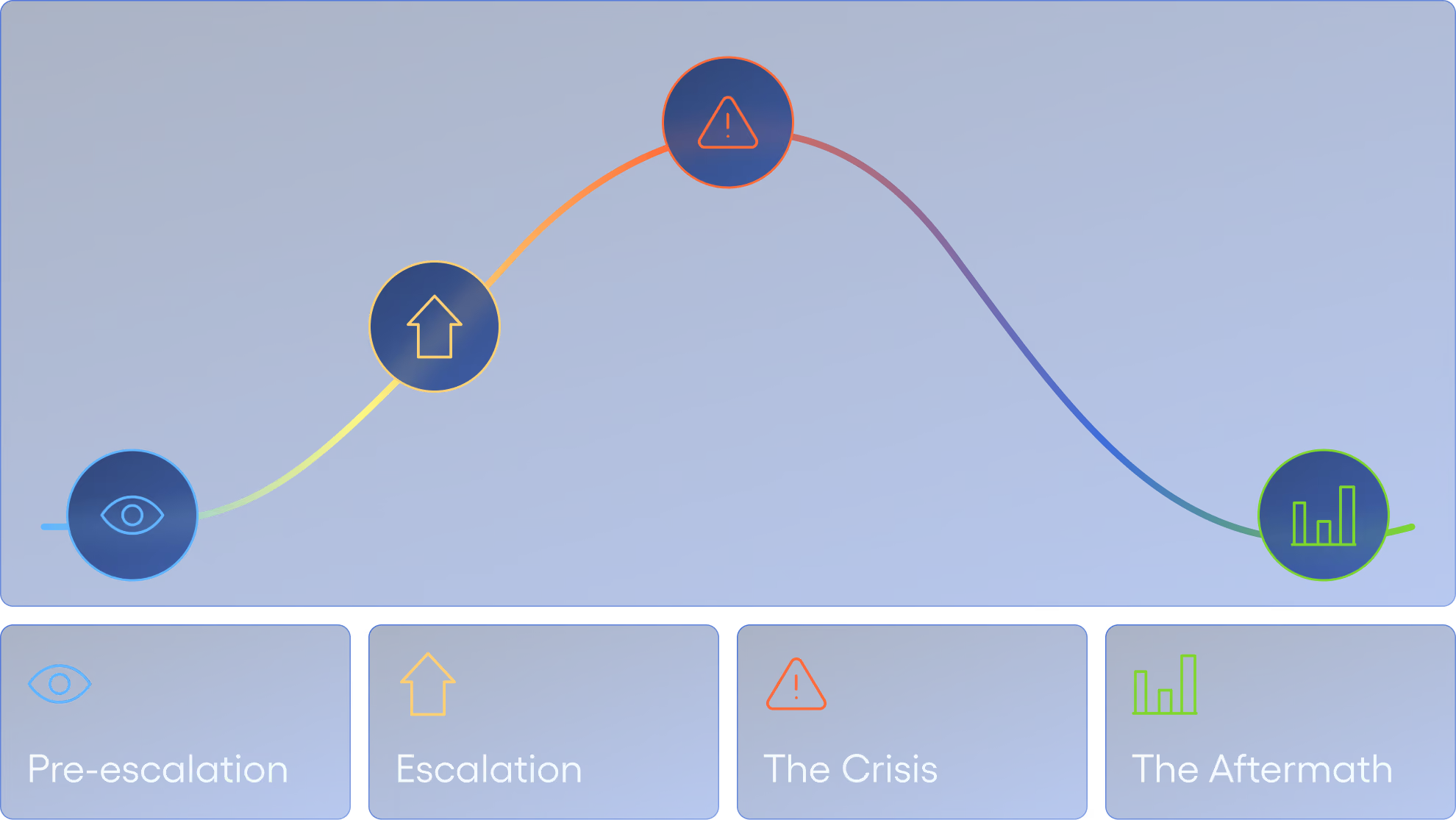
Stage 1
Pre-escalation
The body is already responding.
- Pupils dilate: The body is already scanning for a threat
- Respiratory rate increases: Breathing shallows
- Hypervigilance engages: Attention narrows, and peripheral cues are already being missed
- Amygdala activates: The threat-detection system begins to identify dangers
Stage 2
Escalation
Care continues, but the body escalates its vigilance.
- Blood pressure increases: Cardiovascular strain begins
- GI tract disrupts: Sudden nausea or dry mouth may begin
- Muscles tense involuntarily: The body braces, attention fractures
- Cortisol surge: Stress hormone floods the bloodstream
Stage 3
The Crisis
Clinical performance is compromised.
- Blood glucose spikes: Stored energy mobilized for fight or flight
- Fine motor skills degrade: Tremor sets in, dexterity is reduced
- Adrenaline floods the system:
- Fight-or-flight fully activated: Amygdala overrides logical thought entirely
- Short-term memory impairs: Charting and recall suffer in real time
Stage 4
The Aftermath
The incident is over, but the physiology is not.
- Adrenaline and cortisol persist: The body still feels like it needs to be prepared
- Short-term memory is fragmented: Accurate recall for documentation is compromised
- Sustained hypervigilance: The nervous system stays alert
What these responses mean for patient care
Delivering care after a single incident at the crisis stage means a nurse is working with degraded dexterity, impaired short-term memory, and compromised judgment. Those are not small margins of error in a clinical environment.

One incident. Every leader's concern.
Workplace violence isn't just a clinical problem. It touches every part of your organization and every seat at your leadership table.
Every incident carries a cost
Workers' compensation claims, litigation exposure, and float pool costs all originate with a single incident and often go underestimated across budget categories.
Turnover and workforce stability
Violence-related turnover costs an average of $64,500 per nurse replaced, and the staffing gap it creates is rarely filled without premium labor spend.
Staffing gaps and care continuity
Incidents create immediate staffing gaps. When a nurse can't continue their shift, patient care continuity falls to a team that's already stretched.
Staff wellbeing and safety culture
Repeated incidents take a cumulative toll on nursing staff, affecting wellbeing, care quality, and the sense of safety that keeps your best staff from leaving.
Community reputation and public trust
Workers' compensation claims, litigation exposure, and float pool costs all originate with a single incident and often go underestimated across budget categories.













Client Experiences
"As an executive, every investment must address risk, enhance efficiency, and deliver a clear return. Canopy does all three. It mitigates the significant financial and operational risks of workplace violence, improves our staff retention, and ensures our teams can operate without disruption. It’s one of the clearest ROIs we’ve seen in a platform that protects our most valuable asset—our people."

Every pain point has the same solution.
Intervening at pre-escalation reduces the cost, the clinical risk, and the burden on your team. Canopy gives your staff a discreet way to ask for help before an incident escalates.