Welcome back to our series focused on shaping a safer, more empowered future for nursing.
In our first post, we explored how Maslow Meets the Emergency Department, establishing a fundamental truth: Caregiver safety is not optional; it is the prerequisite for healing. When a nurse feels unsafe, they are forced into Survival Mode, making it impossible to enter optimal Healing Mode.
We’ve since discussed the essential connection between a nurse’s safety and their ability to provide optimal patient care. In the past, achieving safety was defined primarily by the reaction, a quick alert and a rapid response that served as a necessary component of psychological PPE.
But today, to truly sustain that foundational layer of safety, the most profound leap isn't just in the speed of the initial alert, but in the intelligence that follows.
The true strength of an advanced platform like Canopy isn’t solely in the immediate duress activation; it’s in the subsequent data, data that reveals systemic risk patterns, transforms reactive responses into proactive prevention, and gives healthcare leaders the insight to build and maintain safer environments.
Chief Complaint: Incidents Continue, Lessons Go Unlearned
The persistent reality of workplace violence undermines the foundational Safety Needs of our caregivers. Staff often feel that while reporting is mandated, true, systemic change is elusive. The core complaints I hear are:
- Incidents Persist, Undermining the Foundation: While immediate safety tools (such as duress buttons) address the moment of crisis, the underlying issues that create chronic risk remain unaddressed. This failure to learn means the Safety Needs level of Maslow’s hierarchy is continually destabilized.
- Data Exists, but Empathy is Missing: Health systems possess vast amounts of incident data, but too often, it’s treated as a simple tally. It lacks heart. It fails to connect the dots between a duress alert and the organizational failures (like understaffing, poor unit flow, or inadequate training) that contributed to the event.
We are collecting data but failing to apply the empathy and insight required to turn it into meaningful, preventive action.
Assessment: Technology Illuminates Culture and Sustains Safety
The right technology can illuminate culture, making it impossible to ignore the systemic risks that erode nurses' well-being. This is how we move from reactionary Survival Mode to proactive Healing Mode.
Canopy’s intelligence shifts the paradigm from focusing on the single event to understanding the entire ecosystem of risk. Data transforms individual anecdotes of duress into verifiable, scalable evidence. It moves the conversation from "I feel unsafe on the night shift" to "Unit 4B has a 40% higher activation rate between 2 AM and 5 AM, correlating with specific staffing ratios and patient types." This evidence is the essential tool for securing resources and driving the organizational change required to meet the Safety Needs of our staff permanently.
Interventions: A Human-Centered Treatment Plan
The future of nurse safety requires an evidence-based, four-part intervention strategy powered by integrated safety intelligence, allowing staff to operate at the pinnacle of patient care confidently:
- Aggregate and Analyze Duress Activations for Root Causes: Treat every activation as a valuable data point. Canopy’s system aggregates these activations, allowing safety teams to look beyond the immediate moment and analyze the context: What time of day? Which location? Was it related to specific patient handoffs or environmental factors? This analysis uncovers the actual root causes of risk.
- Share Insights Transparently with Frontline Teams: Safety data must not be siloed in executive reports. Sharing transparent, trend-based insights empowers staff to understand risk patterns and co-create solutions.
- Use Trends to Drive Staffing, Training, and Policy Improvements: Data on high-risk times and areas must directly inform operational decisions. If trends show a specific area is highly volatile, resources must follow, whether that means adjusting staffing levels, scheduling targeted de-escalation training, or redesigning policy for patient assessment.
- Celebrate Data that Reduces Harm, Not Just Reports It: Our focus must shift from simply counting reports to celebrating the data that shows harm reduction. Success is measured by the silence of the alert, a testament to effective prevention that keeps staff out of Survival Mode and firmly planted in Healing Mode.
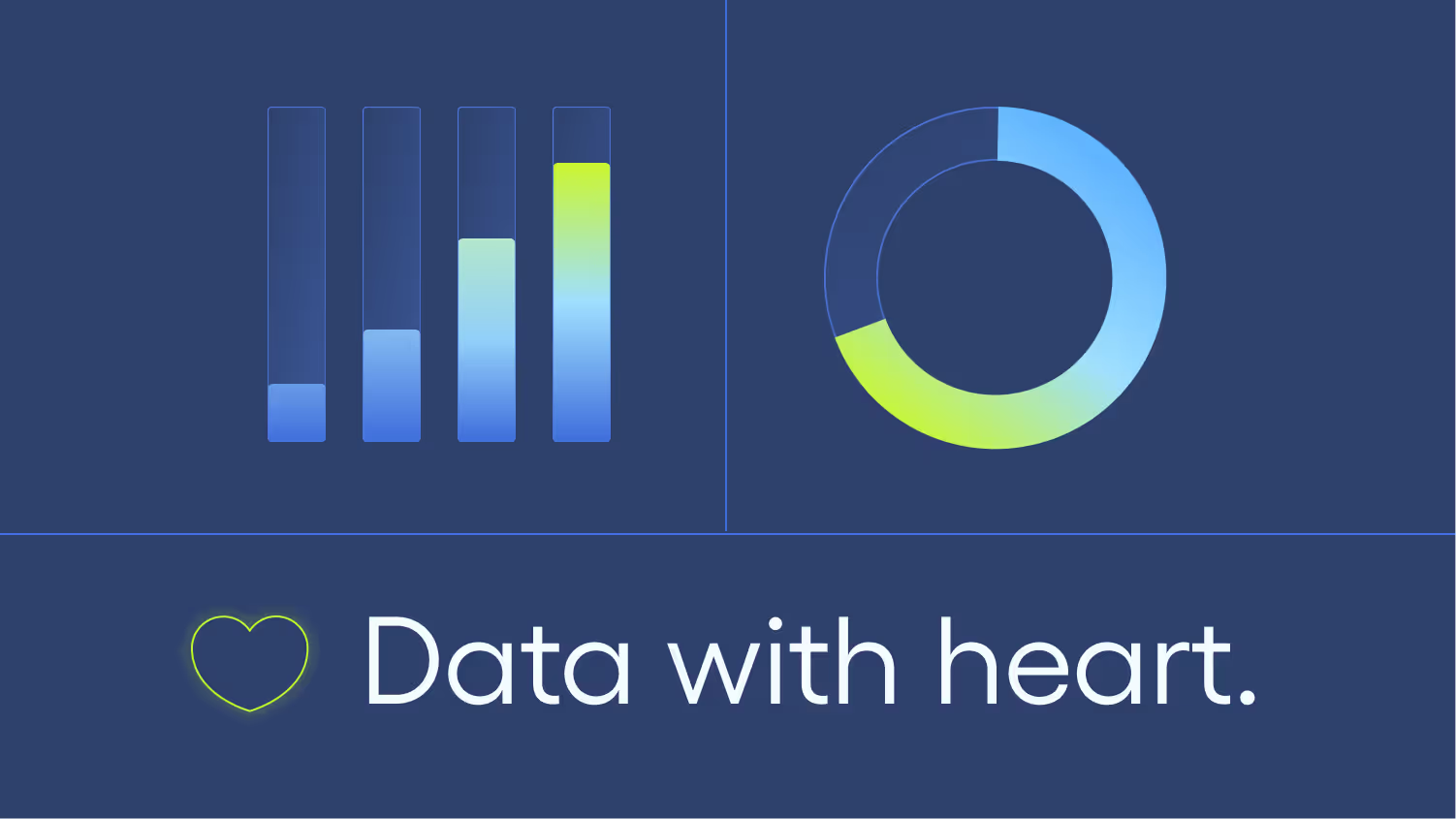
Plan: Data with Heart
The next era of nurse safety will be defined by human-centered analytics. When we couple the speed of a duress alert (our necessary psychological PPE) with the profound intelligence of risk analysis, we don't just protect our nurses; we give them a voice supported by data.
Data with heart, powered by Canopy, means every activation informs a safer tomorrow. It allows us to fulfill our commitment to our caregivers by moving beyond simply reacting to violence and achieving data-driven prevention. This is how we consistently meet the foundational Safety Needs of our staff, allowing them to finally reach the Pinnacle of Care (Self-Actualization) and ensure a superior patient experience for everyone.