Workplace violence in healthcare has long been dismissed as an occupational hazard and something nurses and clinical staff simply learn to accept. But that narrative is shifting as incidents of violence increase and more clinical staff contemplate leaving the profession.
In a recent Canopy webinar held during Workplace Violence Awareness Month, Canopy CEO and co-founder Shan Sinha joined Micah Deriso, Global Head of Partnerships at Verkada, for a frank conversation about the state of healthcare safety, the ROI of investing in staff protection, and what it looks like when technology, people, and process come together.
The Scale of Workplace Violence in Healthcare
The data showing just how unsafe working conditions can be for clinical staff is difficult to ignore. According to Canopy's most recent safety report, 76% of healthcare workers think about personal safety every single day, 85% have experienced a workplace violence incident during their careers, and 25% encounter incidents weekly or daily.
"If you can't feel safe at work," Sinha noted, "it's hard to do your work really well."
The consequences of an unsafe environment ripple outward with burnout, turnover, and retention challenges all tying back to a lack of safety. Replacing a single nurse can cost upward of $60,000, and with turnover rates hovering between 18–22% across many health systems, those costs accumulate quickly. The American Hospital Association estimates that workplace violence costs the industry more than $18 billion annually, with nearly 80% of that tied to post-incident care and recovery.
Shifting from Reactive to Proactive Staff Safety
With numbers like that, simply reacting to individual incidents can be costly. Health systems have to be more proactive to protect their staff, and show them what that protection looks like.
Deriso described the traditional model bluntly, "More technology does not automatically mean more safety." Disconnected systems such as fixed panic buttons, keyboard shortcuts, on-site security guards operating in silos, can actually increase operational burden without meaningfully improving outcomes.
The key is stopping a violent incident before it starts by thinking about the full incident timeline. There is a moment before violence escalates, referred to as a simmer, when a patient or family member becomes agitated, steps into a clinician's personal space, or signals that a situation is about to escalate. Intervening at that moment, rather than waiting for a physical confrontation, is where the greatest impact can be made.
Sinha offered a useful analogy, "If you're in a movie theater, by the time the theater is on fire, things are out of control. But if you can let somebody know when you smell smoke for the first time, that's an opportunity to avert a fire in the first place."
Workplace Safety Technology That Works Together
Stopping an incident means intervening at that simmer stage. When staff begin to feel uncomfortable and can discreetly ask for help.
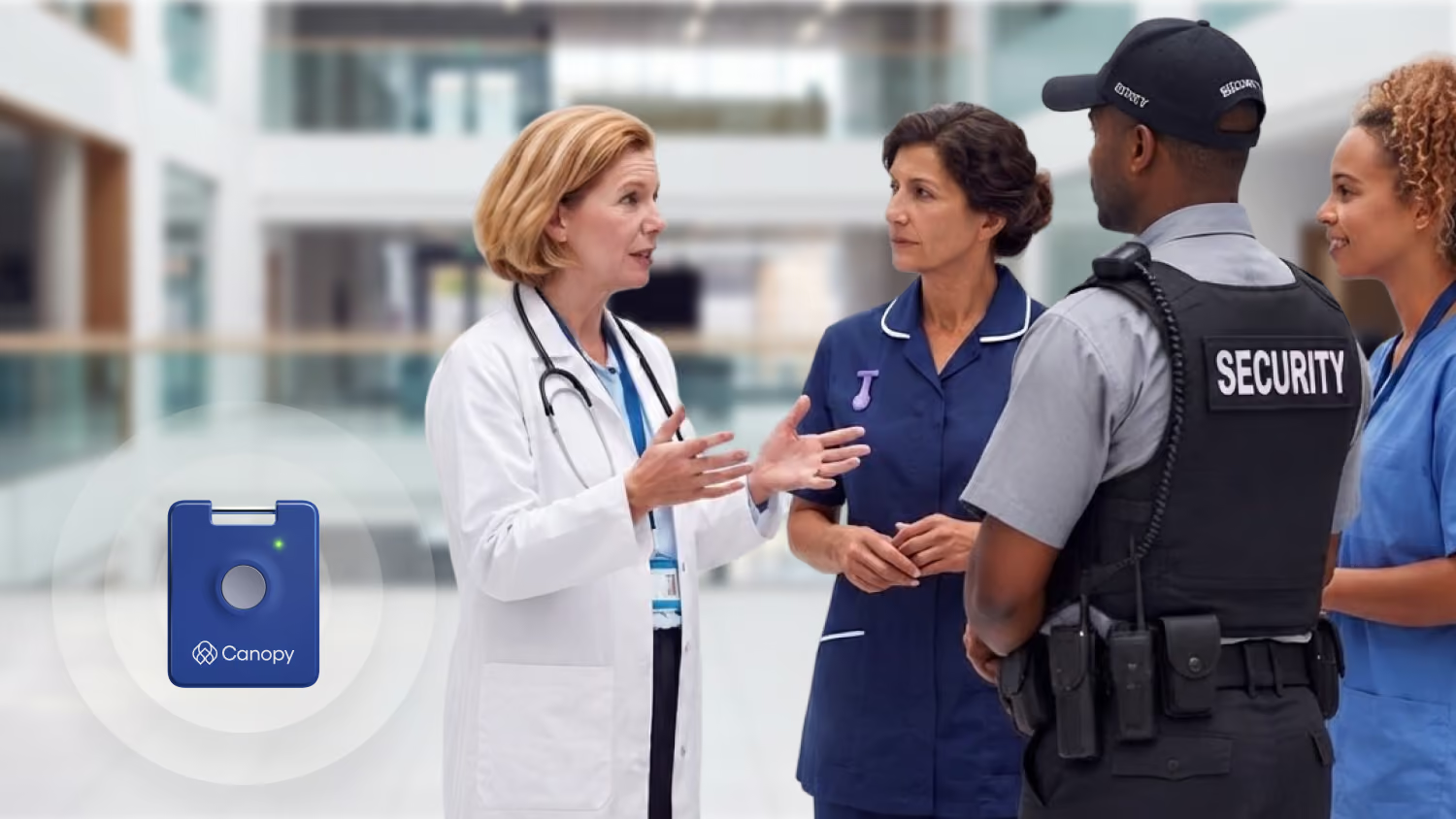
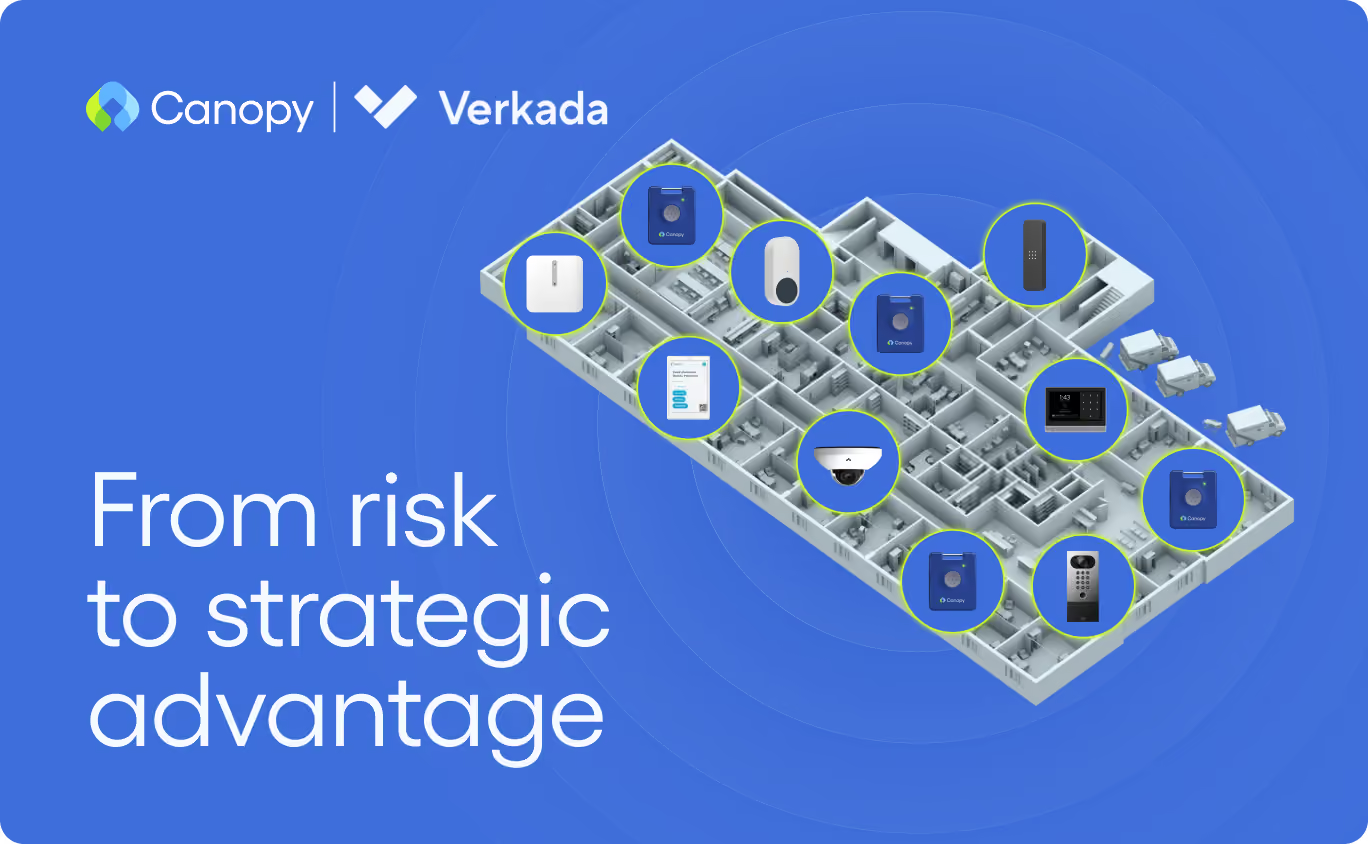
Together, Canopy's wearable duress technology and Verkada's physical security platform create a unified system that makes it easy for staff to discreetly call for help.
The process is straightforward:
- A nurse presses her Canopy duress button as a patient begins to escalate.
- Within seconds, security and nearby colleagues receive an alert through.
- Simultaneously, the Verkada-powered video wall in the security operations center auto-focuses on the area where the incident is occurring, giving security staff immediate visual context.
- Responders are dispatched based on real-time location data, and all incident information is automatically logged into a cloud-based system.
"Every single one of those cameras is basically a security guard watching," Deriso said. "When you press a button, all eyes are on you. And it may be a non-incident. But now you have the intelligence to know how to respond."
This integration matters especially in large facilities where multiple incidents can occur simultaneously. The ability to triage by monitoring a developing situation while dispatching resources to a more urgent one is only possible when systems share data seamlessly.
A Model of Holistic Workplace Safety
As an example of what it looks like to build safety as an organizational priority, an academic health system, ECU Health, deployed Canopy's wearable safety technology across 15,000 staff members alongside a comprehensive Verkada camera installation. This included every corner of their facilities, from inpatient units to outdoor locations and outpatient clinics.
What distinguished their approach was the stakeholder alignment behind it. Rather than treating security as an IT or facilities function, they built a cross-functional team that included clinical, IT, facilities, and executive leadership. The result was a safety infrastructure that everyone understood, owned, and used.
"The best hospitals are treating safety as a leadership metric and a culture initiative," Deriso said, "and using technology to reinforce that, rather than viewing it as a back-office function."
Within months of going live, the health system saw measurable improvement in how safe their staff reported feeling. Across their broader customer base, Canopy has seen outcomes including a 15% decrease in staff turnover at a large academic medical center in the Northeast and a 66% reduction in DART (Days Away, Restricted or Transferred) injuries at WellSpan Health in just one year.
Safety as a Strategic Differentiator
For healthcare leaders weighing the investment, the question is not whether organizations can afford to invest in safety, but whether they can afford not to.
Expectations are evolving with younger generations entering the healthcare workforce looking for visible investments in their safety. They interpret the presence or absence of those investments as a signal about how an organization values its people. The same logic applies to patients and families, who increasingly factor perceived safety into where they seek care.
"Hospitals that lead on safety now," Deriso said, "will have an advantage when recruiting, when retaining the people they get, in patient confidence, and in overall care quality because they've created an environment where everyone feels safe."
There is also the accreditation dimension. When the Joint Commission visited the University of Michigan after this integrated technology stack was deployed, reviewers described what they saw as an emerging industry best practice.
Building a Modern Safety Program
For organizations looking to build or modernize their safety programs, the webinar offered a practical starting point:
- Begin with a holistic assessment of your current risk environment.
- Align stakeholders across clinical, security, IT, and executive leadership.
- Prioritize solutions that are simple for frontline staff to use, scalable for IT, and measurable for leadership.
The goal, as Sinha put it, is to focus on the things that actually ensure security.
"When staff feel safe," he said, "they can show up better for their patients. And that's why we're all here."
This blog post recaps a webinar hosted by Canopy featuring Canopy CEO Shan Sinha and Micah Deriso, Global Head of Partnerships at Verkada. For more information about building a modern healthcare safety program, reach out to us at canopyworks.com.