The prevalence of workplace violence in healthcare is well documented, as are the costs. The human cost, however, is harder to quantify but just as real. Even at the earliest signs that a situation may turn violent, the body and brain of the clinician involved begin to prepare them for what could happen next. And while these responses are designed to protect them from harm, they can affect their judgment, dexterity, memory, and ultimately the care they're able to deliver.
Violent Incidents Don’t Always Start With Violence
Workplace violence in hospitals rarely begins with an overt act of violence. It follows a predictable arc, moving from early warning signs through escalation, into crisis, and finally into an aftermath that lingers long after the situation has resolved. Throughout this arc, the clinician's body and brain are responding in ways that directly impact their ability to provide care.
Early Warning Signs of Workplace Violence in Healthcare
Before anything has technically happened, the body is already preparing for the worst. Sometimes the cues that a situation could escalate are almost imperceptible. It can be a shift in the patient’s tone, or a family member voicing their frustration. Whatever the cue, a nurse can often sense this shift before they can even name it.
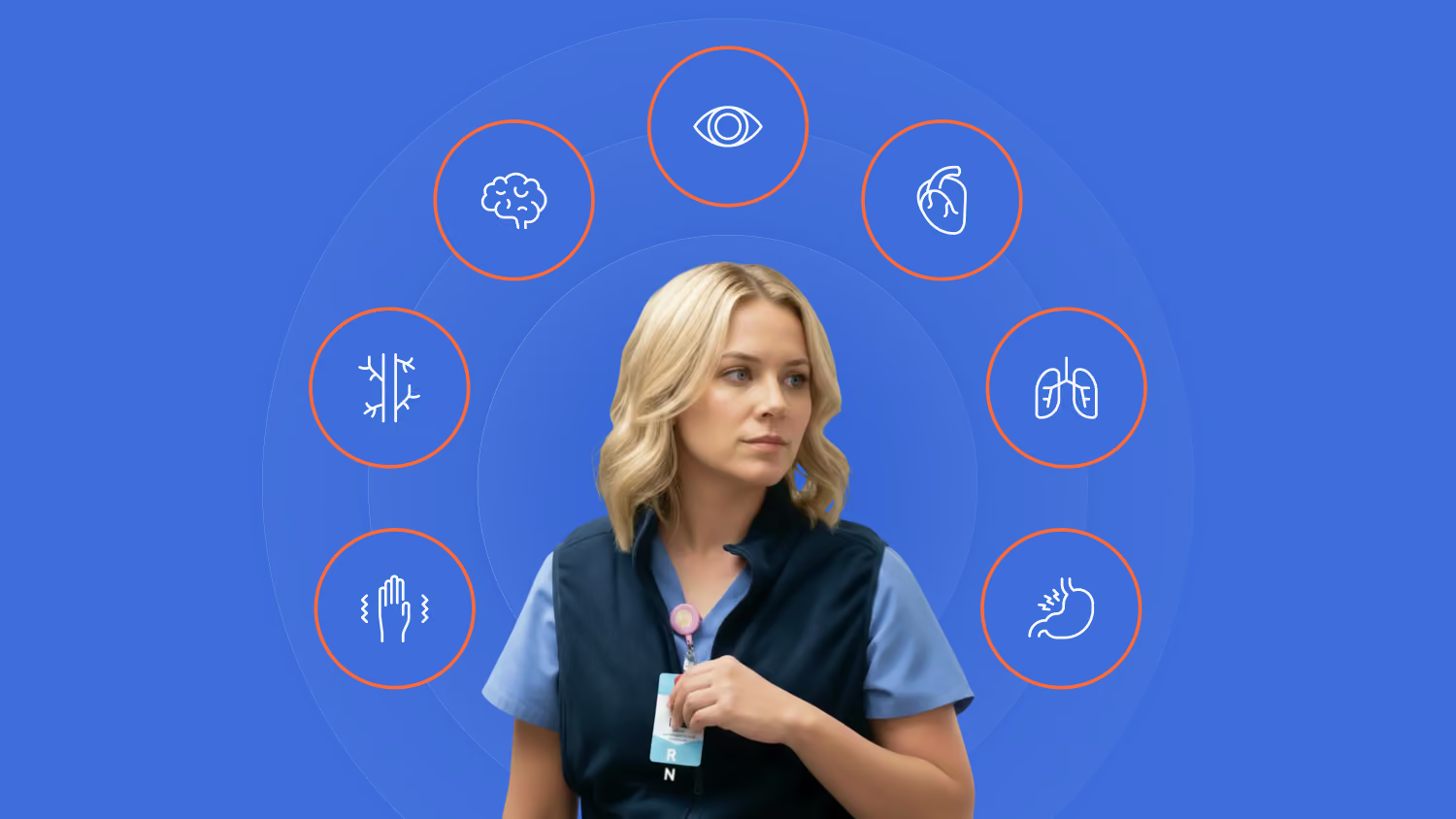
At this stage, the body is preparing itself for what could happen. The pupils dilate, breathing shallows, and the brain's threat-detection center, the amygdala, comes online. Hypervigilance engages, and attention narrows toward the perceived threat. Clinically, the nurse is still fully functional. But the narrowing of attention means other patients in the environment are already receiving slightly less of their focus.
This is when intervention is most effective, and the stage that's most often missed. Nothing has happened yet. No one has been hurt. Reaching for a phone or activating a fixed panic button can feel like an overreaction, and in many systems, it functions like one, discouraging calling for help before there is a tangible threat. That friction is enough to stop a nurse from asking for help at all. But their body is already preparing for defense, and without support, the nurse is left to manage whatever comes next entirely on their own.
How Escalating Tension Affects Clinical Performance
As things escalate, warning signs are no longer subtle. Maybe a patient begins to refuse care, a voice is raised, or a family member physically blocks the nurse’s path. This is also when the physiological response intensifies with rising blood pressure, surging cortisol levels, and muscles tensing involuntarily in preparation for a physical altercation.
In the brain, the prefrontal cortex, which governs clinical judgment, reasoning, and decision-making, begins to dim. The nurse is still at the bedside, administering medications and completing assessments. But the cognitive resources required for safe medication checks, accurate assessment, and clear communication with colleagues are no longer operating at full capacity. Tasks that are automatic under normal conditions now require deliberate effort.
Fight, Flight, Freeze, and Fawn: Survival Responses in Clinical Settings
As violence is happening, the body's threat response is fully deployed. Fine motor skills degrade as tremors set in. Short-term memory begins to fail in real time.
This is also when survival responses take over. Fight and flight are well understood, but two others are equally relevant in clinical settings. Freezing, where a clinician is overwhelmed into immobility, can prevent them from reacting to danger efficiently. Fawning, a response that drives appeasement behaviors, can compel a nurse to comply with an aggressor to reduce the immediate threat, agreeing to requests they would otherwise decline, or allowing a patient to do something unsafe because the nervous system has calculated that compliance feels safer than resistance. And in each case, patient safety may be affected.
After the Incident: Why the Physiological Impact Does Not End With the Threat
Once the incident is over, documentation begins. If the nurse can continue with their shift, they move on to the next patient. But the body does not stand down on command, even when the threat has passed.
Cortisol and adrenaline remain elevated. Sustained hypervigilance continues, meaning the next patient interaction begins under a cognitive load that has nothing to do with them. Memory of the incident itself is fragmented, which compromises the accuracy of the documentation that organizations depend on for risk management and regulatory compliance.
This is where cumulative harm begins. Without structured post-incident support, the physiological load compounds over time, contributing to burnout, which research consistently links to lower care quality and patient satisfaction. The incident ends, but the cost of it does not.
What This Means for Healthcare Leaders
Delivering care after a single crisis-level incident means a clinician is working with degraded dexterity, impaired short-term memory, and compromised judgment. Those are not small margins of error in a clinical environment.
Across a career, the picture becomes more serious. Nurses with repeated exposure to workplace violence show higher rates of burnout, cognitive fatigue, and clinical decision-making errors, not because they are less capable, but because their nervous systems have been asked to carry a load they cannot sustain indefinitely.
The organizational implications are significant. Violent incidents cost U.S. hospitals an estimated $18.27 billion annually. Replacing a single nurse costs an average of $64,500. Staff who don't feel safe disengage and eventually leave, taking years of institutional knowledge and clinical relationships with them.
The question for healthcare leaders is not whether workplace violence affects patient care. The evidence is clear that it does. The question is at what point in the arc of an incident that effect can be interrupted. For most organizations, the answer is earlier than their current safety infrastructure allows.
The Case for Early Intervention
The physiological difference between responding at the first sign of danger and responding during a violent incident is significant, and the short and long-term impact on the body reflects that gap.
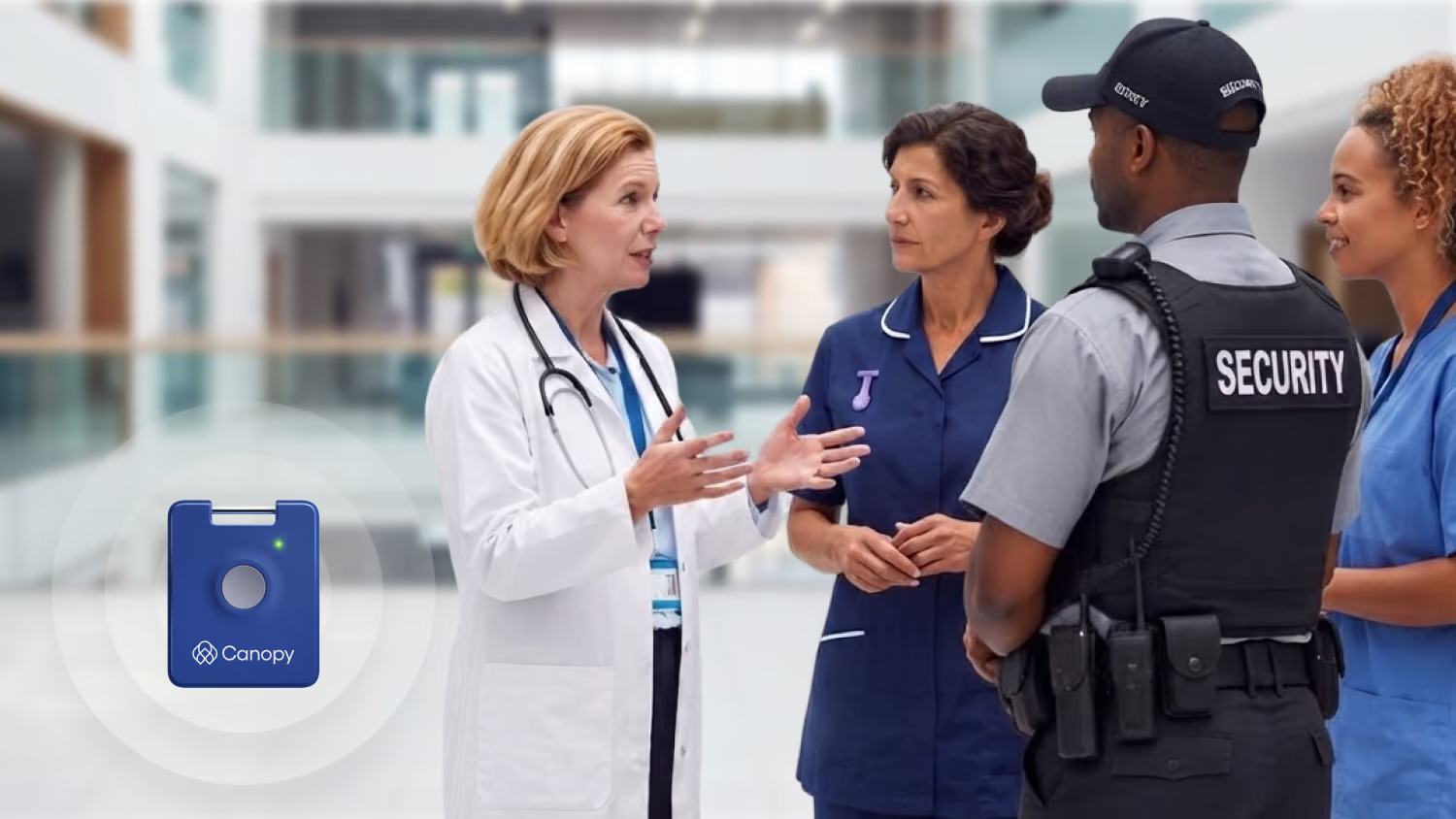
What clinicians need is a way to ask for help before a situation fully escalates, that doesn't require them to stop what they're doing, leave the room, or signal to a patient that they feel threatened, which can itself accelerate escalation. That's the gap that tools like Canopy Protect are designed to close, giving staff a discreet, immediate way to call for help the moment something feels off, before the physiological cascade goes further.
When help arrives early, the clinical story changes entirely. Judgment, fine motor skills, and memory remain intact. The next patient interaction begins with a nervous system that hasn't been fully depleted. And for organizations, fewer incidents escalate to the point of requiring workers' compensation claims, incident reports, or staff time lost to post-event processing.
For healthcare leaders, the goal is building a safety program that intervenes before the cost, in every sense of that word, becomes unavoidable.
Learn more about workplace violence and it's effect on your staff
Workplace violence in hospitals has a far-reaching impact across your hospital’s culture. Read how one act of violence can affect the psychological safety of everyone in the unit.